
DIY Dog Grooming: How to keep your dog looking wonderful
Many of us don’t have the budget or time to take our dogs to a professional groomer on a regular basis, but that doesn’t mean we can’t create our own beauty routine for our furry friends.
If you can’t make it to a groomer, there are plenty of ways to do it yourself at home.
You can even pamper your pooch between professional grooming sessions, allowing you to strengthen the precious bond with your fur-baby.
Trust us, the last thing you want is to run into Karen at the dog park and be judged on how unkept your dog is.
“Look Karen, just because my dog is smelly, is starting to get dreadlocks and is covered in mud, doesn’t mean I don’t love him!”
Dog mums are the biggest Karens – sorry, but it’s true. Riiiight?!
To help out, we’ve put together all the best DIY dog grooming tips for you here, so you can make sure Fluffy or Fido maintain their beautiful shining coats (which you can rub in Karen’s face next time you accidently see her at the dog park).
Gather your grooming tools
You’re likely to need the following basics to get your washing station set up:
- Access to a hose (or shower head)
- Bucket / scoop / cup for pouring water
- Shampoo (we highly recommend Ipromea Woof Wonder Glow Shampoo)
- Sponge
- Brush (depending on the dog, you may need a dematting brush)
- Towels – multiple, i.e. one for the floor, one for you, one for the dog, second one for the dog
- Dog nail clippers
- Cotton buds
- Healthy treats
- Dental chews
Gather your grooming tools
Before you get started with the washing part of the grooming routine, be sure to give your dog a good brush first.
Brushing will help get rid of the loose hair and detangle any matting that may have occurred.
Dogs that tend to shed their coat layers in different seasons may need a special shedding / dematting brush so ask your local groomer, vet or pet store for advice on which one is best suited to your dog’s coat.
Be prepared for hair to go everywhere, so this might be an outside task or in the bath.
The brushing process should be enjoyable for your dog. Don’t rush the brush or be too rough, most dogs enjoy a calm soft brushing motion.
If they have sensitive spots, go slowly and avoid any areas they truly dislike (get them checked out at the vet if they seem to have pain around a sensitive area).
At the end of the day, your dog will appreciate all the extra attention they’re getting from you.
Brushing your dog not only makes them look amazing, but it also provides some bonding time for you both (very important for a happy and loyal companion).
Inside or outside dog wash station?
Now that your dog has been brushed, and you’ve got your ‘toolkit’ ready, set yourself up in a washing spot that suits your dog’s size and gives you access to water.
Once done, the question is – do you use a hose, bucket, shower or bath for washing the dog?
Short answer, any will do! You don’t need a fancy dog washing bath for this.
If you have a little pup, either will work. But if you have a small tub and a big dog, it might be a struggle to get them in and out and restrain them from jumping out.
Outside is always a good idea because it means you can water the grass at the same time, you won’t mind the wet ground and mess, and the sun can help dry them out.
Most people have an outside hose for the garden, so they can hook it up and drag it to where they think suits them best.
A bath or shower works well for some dogs, as you can keep them confined in the bathroom, easily reach them and wash everything away down the drain.
Be prepared to get soaked and covered in dog hair
The fact of the matter is, you’re going to get very wet washing your dog.
It’s best to either wear clothes you don’t care about so there are no worries about getting wet, dirty and hairy.
If the weather is warm enough, why not chuck on your swimmers and do it outside on the grass?
Be sure to have the towels ready for the aftermath as your dog will no doubt shake water everywhere and want to run off for a nice roll-around on the ground.
Treat your dog with high-quality probiotics
Whatever you do, do not use human-grade shampoos, conditioners or any other products you use for your personal grooming routines.
It’s important to stick to pet or dog-specific products that are especially designed for dogs, not humans.
The last thing you need is a trip to the vet because they’ve had a reaction to the product.
A dog’s skin can be highly sensitive to various ingredients that human skin can tolerate, even though there are plenty of human hair products out there that are natural, organic and claim to have no chemicals or additives. Despite this, it’s better to use pet products and be extra safe, rather than sorry.
Simply put, look for a pet brand with a shampoo that is hypoallergenic, natural, uses soothing ingredients and is free from nasty chemicals and sodium lauryl sulphate (SLS) (plus any other harmful or toxic ingredients).
Obviously, we’re going to be biased and tell you to buy the Ipromea Woof Wonder Glow Shampoo – it’s clearly one of the better brands out there.
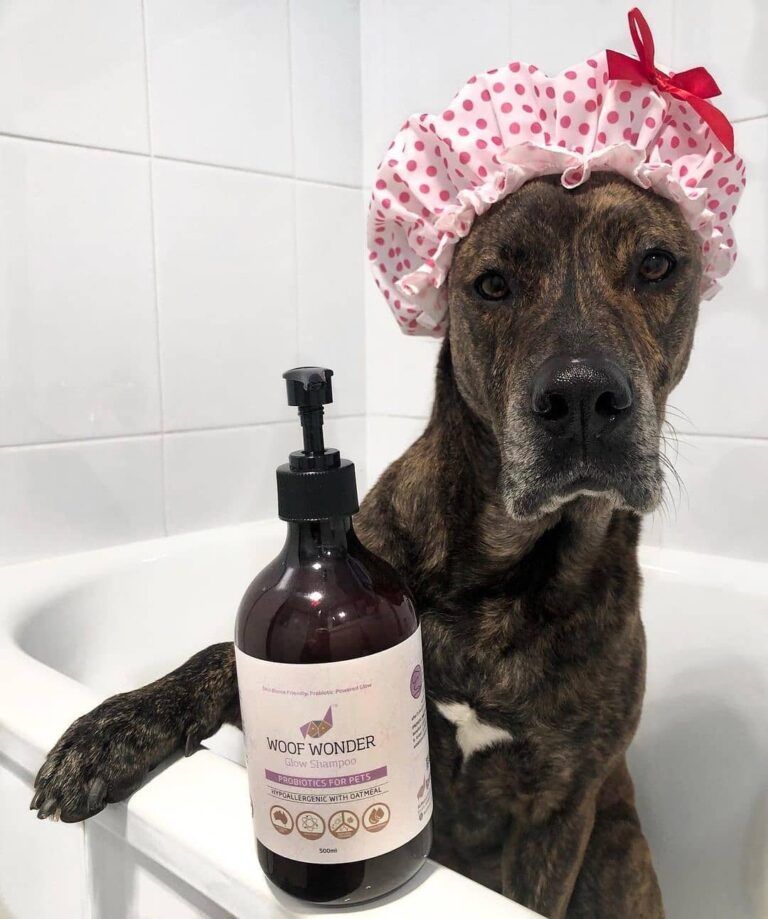
It’s packed full of all the good stuff, including postbiotics, that will not only clean your dog but also be sensitive and soothing on their skin, keep them smelling amazing and promote overall wellbeing – as the skin (an organ) will absorb the postbiotics into the dog’s internal system.
Woof Wonder Ingredients:
- Lactobacillus spp. Zoonatant™ (Z-200™)
- Lactococcus spp. Zoonatant™ (Z-300™)
- RO Water (Aqua)
- Decyl Glucoside
- Cocamidopropyl Betaine
- Coco Glucoside
- Glycerol
- Oatmeal Extract
- Phenoxyethanol
- Xanthan Gum
- Tea Tree Oil
- Salt
- Sodium Hydroxide.
As for the other grooming products, just make sure you ask your vet, groomer, or local pet shop for the best advice for your specific dog breed and their ailments/fur type, plus budget, to find the right fit for you.
To dry or not to dry – that is the question?
Personally, I’m all about air drying. Just run around in circles and, wallah – they’re dry.
Some dogs can dry quicker than others and can shake it off quite easily, but other dogs can retain water like a sponge so a proper towel dry would be highly recommended.
There are pros and cons for drying or not drying your dog after a wash, and all it comes down to is the type of dog (and how much patience) you have.
Some dogs have a bit more skin folds or flaps that collect moisture and need to be dried properly. There is a higher risk of fungi or bacteria growing in these moist environments, so you need to be onto it.
Using probiotics/postbiotic products will help with this issue but keeping the area dry is very important.
You don’t want to use a blow dryer and overheat or burn your dog, so you need to be careful with this type of equipment. Not to mention, your dog might have a complete freak out from the noisy air blowing at them.
Another reason and benefit to drying them completely is that they are less likely to collect more dirt and stuff in their coat if they decide to go rub and roll on the ground (highly likely).
Restrain your dog or risk playing chasies
As per the point above, you might want to restrain your dog with a collar and lead so that they can’t jump out of the bath or run off to roll around in the dirt during the cleaning process.
It’s not much fun having to start all over again so tying them up or holding onto their lead is a good idea.
You might think your dog is super well behaved, but dogs are smart and can get the better of you if having a bath really isn’t their favourite thing to do.
Cheekier dogs might even think it’s a game to run off on purpose to get you to chase them.
Who knows, your dog might love the water and enjoy getting a good scrub – yay for you!
They might stay there but if you’re not sure and are planning on doing the full routine, It’s better to tie them up to avoid your dog getting bored and wandering off during the process.
Keeping pup happy – treats help
The best thing to do during your dog’s grooming routine is to ensure it is a positive experience.
You don’t want to freak them out and leave a bad impression so that each time is a dreaded experience for both pup and yourself!
How do you keep your dog happy during grooming, you may ask?
Well, it helps to have a second pair of hands for one thing. The other person can comfort and talk to your dog whilst you do the hard work.
Or, if you must do it alone, just make sure you create a good experience:
- Ease them into the situation with some play and cuddles
- Give your dog some little breaks
- Put on your happy encouraging voice
- Give them some treats throughout
- Reassure them that they are being a good girl/boy
- Praise them afterwards and give them their final finishing reward (cuddles and treats – whatever makes your dog happy)
Trim those claws
Some dogs might require regular nail trimming but some dogs, especially those doing plenty of exercise outdoors may not need to because their nails become naturally worn down.
Trimming a dog’s nails can sometimes be quite tricky and requires special clippers designed for dogs.
Firstly, it might be best to get the vet or groomer to show you how to do it correctly without cutting the wrong part of the nail.
Dogs skin and blood vessels can grow further into the nail than you think, so it is quite easy to go too far and cause blood and pain – which is why you need to know what you’re doing and must be super careful.
It helps to tie them up securely or have someone help hold the dog while the other does the clipping.
As above, don’t rush this process and try to make the experience as pleasant as possible.
Eyes and ears and mouth and nose…
Generally, you don’t have to clean the eyes, ears, mouth, or nose of a dog as these areas should naturally be in good condition unless there is an underlying health issue.
Your dog’s eyes should be left untouched, except if they appear to have discharge, redness or closing often – then you must get them checked at the vet.
Some eye problems can be treated with the addition of probiotics in their diet. You can also try to use a cotton bud with warm water under the eyes to get rid of any gunk but be careful not to get too close to the eyeball to irritate it further.
Sometimes all your dog needs is a little trim around the eye area so the hair isn’t causing irritation to them.
Cleaning your dog’s ears is not necessary either and if you think the ears smell or look clogged/infected, please see the vet for the right treatments. It’s not advisable to put anything into healthy ears.
Your dog’s teeth can easily be maintained via dental chews, raw meaty bones or other dog chews.
A dog’s nose is quite sensitive, and they will be able to clean it themselves with their tongue. If you notice anything odd, get it checked out.
Cuddles at the end of the session
Once your furry friend has been bathed, brushed, and groomed to perfection, it’s time to enjoy some big cuddles.
Not only does your dog now smell divine, but they are less likely to leave behind their hair and dirt on your carpet or couch!
Cuddles will make both you and your dog feel extra good with feelings of love, re-enforcing that bond you share.
Brag about your DIY achievement and your wonderfully clean dog
You know what people say, if you don’t photograph and share it, then it didn’t happen!
So, why not feel good about your achievement of washing your dog and post about it?
While you’re washing your dog, capture your before, during and after shots, make a video of the whole thing or post some of your own tips to your followers.
Be sure to tag all your favourite products and, who knows, your dog might end up becoming a petfluencer (pet influencer).
We would love to see photos and videos of your DIY dog washing experience! If you used Woof Wonder shampoo or Beg N’ Bark treats even better. So please be sure to tag us @ipromea @ipromeaprobiotics #DIYdogwash #woofwonder
Explore More